proudly serving
the mid-south


Common Causes of Ice Clumping in Storage Bins and How to Prevent Them
Ice clumping in your storage bins can really slow things down and annoy your team. Excess moisture in the bin is the main culprit, causing ice pieces to stick together. Poor airflow, temperature swings, and the constant cycle of melting and refreezing just make things worse.
If you skip regular cleaning, slime and mold can form, making the clumping problem even messier. At Memphis Ice, we’ve noticed that sticking to a cleaning schedule and basic maintenance keeps clumps at bay and your ice fresh.
Understanding Ice Clumping in Storage Bins
Ice clumping is basically when ice cubes stick together inside your bin. It makes scooping tough and can jam up your ice machine. If you know what causes clumping and which bins are most likely to have it, you’re already ahead.
What Is Ice Clumping?
Ice clumping is when cubes freeze into lumps inside the bin. Usually, this happens because moisture builds up and then refreezes, gluing cubes into chunks. Sometimes, temperature swings inside the bin melt and refreeze the cubes, leading to the same result.
You’ll notice clumped ice feels like a solid block or a sticky mess. It happens a lot in bins that get opened all the time—warm, moist air sneaks in. If you haven’t cleaned the bin in a while, leftover water or slime just speeds up the problem. The trick? Keep the bin cold and dry.
Why Ice Clumping Is a Problem
When cubes stick together, it’s a pain to scoop or serve them. Clumps can even break your scooper or slow down service, which is the last thing you need during a rush.
Big ice chunks melt unevenly, so you end up wasting ice and maybe paying more in refrigeration costs. Sometimes, clumps clog your chute or ice machine, and then you’re looking at repairs or service calls.
For Memphis and the Mid-South, avoiding these headaches means less downtime and happier customers. If you clean your ice bin often and keep humidity low, you’ll keep your ice (and customers) happy.
Types of Ice Bins Prone to Clumping
Some bins just make clumping more likely. Open-top bins or ones with weak insulation let in warm air, which means more moisture and faster clumping as the ice melts and refreezes.
Smaller bins that fill up fast can squish ice together, especially if you don’t break up the pile from time to time. On the flip side, bins with good insulation and tight lids keep things cold and dry, so clumping isn’t as much of an issue.
If your bin has poor drainage or collects water at the bottom, that standing water will freeze and create chunks. It’s worth picking a bin that fits your needs—and honestly, it’s smart to talk to the Memphis Ice folks about what’ll work best for your setup.
Primary Causes of Ice Clumping
Ice clumping happens when cubes stick together in your storage bin, making it tough to get clean, separate cubes. It slows down service and can even mess with drink quality. The usual suspects? Temperature changes, opening the bin too often, and poor airflow.
Temperature Fluctuations
When the bin temperature isn’t steady, cubes melt a little and then refreeze. That thin layer of water between cubes turns solid, sticking them together.
If the temperature goes above freezing for even a bit, you’ll get water on the ice. When it cools off again, that water freezes and locks cubes together. This happens a lot if insulation is weak or the cooling system is on the fritz.
Keep your unit at a consistent cold temperature. Memphis Ice suggests regular maintenance to catch cooling issues before they turn into clumping problems.
Frequent Opening of the Bin
Every time you open the bin, warm air rushes in. That raises the temp and causes condensation on the ice.
That moisture then freezes between cubes, sticking them together. The more you open the bin, the more moisture builds up.
Try to limit how often you open the door, especially during busy times. If your team needs ice fast, use a bin with a tight-sealing lid or door that keeps warm air out.
Improper Ventilation
Bad airflow around the bin or in the storage area traps heat and humidity. That creates the perfect storm for melting and refreezing cycles—and, you guessed it, clumps.
If your ice machine is in a tight spot or it’s a hot Memphis summer, heat can build up quickly.
Give your ice machine and bin enough space to breathe. Good ventilation controls humidity and temp, so cubes stay cleaner and don’t stick. Memphis Ice can help you figure out how to improve your setup.
Moisture and Humidity Issues
Keeping moisture under control inside your bin is huge for preventing clumps. When water pools or the air gets too humid, ice starts sticking together. Here’s what to watch for, and how to fix it.
Excess Condensation in Bins
Condensation forms when warm, moist air hits the cold bin surfaces. That water drips onto the ice, melts it a little, and then refreezes—clumping the cubes. You might see little puddles or damp spots inside.
To cut down on condensation, make sure the bin is sealed and insulated. Don’t leave it open for long stretches. If you see condensation, dry it out and check that the drain lines aren’t clogged. At Memphis Ice, we see all the time how regular cleaning keeps moisture (and clumps) away.
High Humidity Environments
If your bin sits near a kitchen or somewhere with bad airflow, the humid air will make ice clumping worse. Humid air drops water vapor onto the ice, making it sticky.
Fix this by improving air flow around the machine and bin. Use fans or a vent system to keep the air dry. Keeping humidity low matters just as much as cleaning the machine. Lower humidity also means less risk of slime and mold.
Water Dripping from Ice Makers
Sometimes the ice maker itself drips water into the bin. Drips from the ice-making process or leaky plumbing leave uneven wet spots on the ice. That pooled water freezes cubes into clumps.
Check for leaks and make sure all connections are tight. Align the drain system so water doesn’t drop into the bin. Memphis Ice always recommends checking for these issues during routine maintenance—catching them early saves you from clumps and mold.
Poor Ice Handling Practices
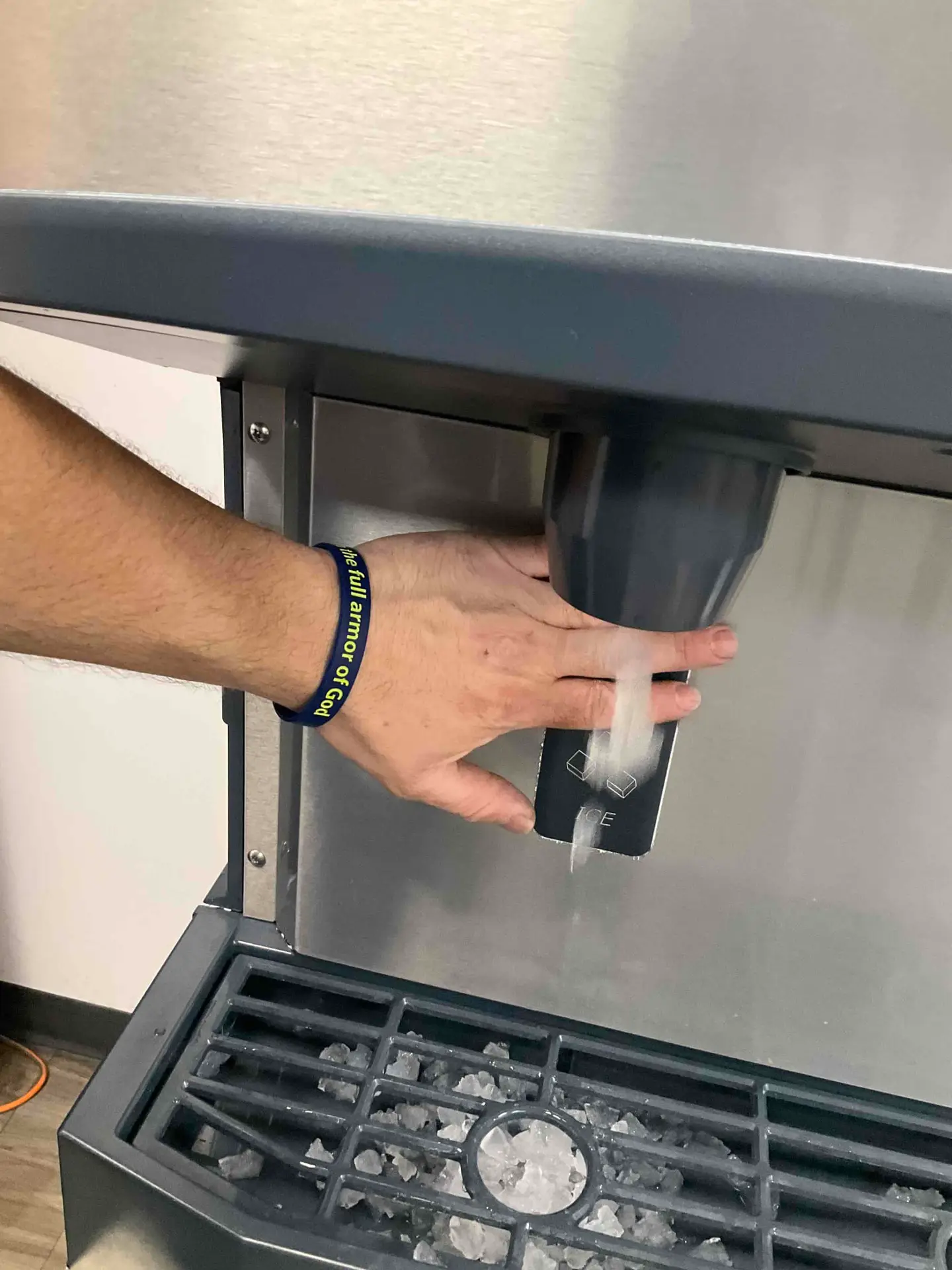
How you handle ice after it drops from the machine matters more than you’d think. Simple stuff like grabbing ice with wet hands or dumping new ice on old can cause clumping fast.
Handling Ice with Wet Hands
If you use wet hands to grab ice, you’re adding moisture that makes cubes stick together. Even a little water speeds up melting and refreezing, making the ice sticky.
Use clean, dry scoops or gloves when handling ice. Avoid using your hands if you can. At Memphis Ice, we say keep scoop handles dry and swap out scoops regularly to stay clean and keep moisture down.
Stacking Fresh Ice on Old Ice
Dumping new ice on top of old ice in the bin just makes clumping worse. The old ice might already be melting at the edges, and adding fresh cubes warms things up. This creates water layers that freeze unevenly and glue cubes together.
Try to keep fresh ice separate or at least rotate your stock. If you always pile new cubes on top, clumps will form and you’ll lose usable ice. Breaking up old chunks and letting air circulate helps keep ice loose.
Impact of Bin Material and Design
The material and design of your storage bin play a big role in how much ice clumps. Insulation and drainage are huge. If your bin can’t keep things cold or get rid of water, you’ll end up with big clumps.
Insulation Quality
Good insulation keeps the temperature steady. Poor insulation lets warm air in, which melts and refreezes the ice, creating lumps.
Bins with strong industrial insulation block outside heat, keeping ice colder for longer. That means less clumping.
If you’re in Memphis or anywhere hot and humid, thick, quality insulation is a must. It keeps cubes clear and separate—just what your customers want.
Poor Drainage Systems
Water left in the bin leads to clumping. If drainage is bad, melted ice just sits there and refreezes, gluing cubes together.
Bins with good drainage let water out fast, so you don’t get that extra moisture. If your drain’s clogged or too small, clumps are pretty much guaranteed.
Check that your bin’s drain system works well, with no blockages and a proper slope. It’s a small thing, but Memphis Ice always points it out during maintenance because it makes a big difference.
Frequently Asked Questions
Ice cubes usually stick together because of moisture, temperature swings, or issues with your ice machine’s settings. Melting and refreezing or poor airflow can also cause clumping.
Why do ice cubes stick together in my freezer’s storage bin?
Moisture causes cubes to melt a bit, then refreeze. If warm air gets in, you’ll see frost or ice buildup, and cubes freeze into a block. Check your freezer seal to keep temps steady and moisture out.
What causes ice clumping in my Whirlpool refrigerator’s ice maker?
With Whirlpool and similar brands, it’s usually inconsistent temps or a dirty bin. If slime or mold is growing, it traps moisture and makes ice stick. Clean your bin often and keep the evaporator plate clear to avoid this.
How can I prevent ice from freezing together in my ice maker?
Keep the bin clean and dry. Don’t open it too often, and check that your machine’s thermostat keeps things cold (but not so cold it causes frost). Wipe surfaces with a food-safe sanitizer every week to cut down on slime buildup.
What might cause ice to melt and refreeze in a portable ice maker?
In portable machines, ice melts and refreezes if it gets too warm or if you leave the bin full for too long. Keep your machine in a cool spot and empty the ice regularly.
What are the reasons for decreased ice production in some machines?
Low water flow, clogged filters, or worn parts can all slow ice output. Dirty filters make water flow poorly and create cloudy ice. Weak water supply or wrong settings can also cut production. Regular maintenance keeps things running right.
How to stop ice from clumping together in a countertop ice maker?
Start with clean, cold water—change it out often to keep impurities low. Wipe down the bin and machine now and then, and try not to let ice sit for ages without using it. Take a quick look for any cracks in the gaskets or doors; warm air sneaking in is a sneaky culprit for clumping.
At Memphis Ice, we’ve seen just about every ice mishap since 1977. A little regular cleaning and some attention go a long way toward keeping your ice crisp and fresh.
Recent News

Behind the Scenes: How Ice Supports Catering, Festivals, and Spring Events

The Role of Ice in Spring Menus: From Patio Drinks to Seasonal Specials

Is Your Ice Machine Ready for Warmer Weather?
Spring Cleaning For Your Ice Machine

Hosting Easter Brunch? Don’t Forget the Ice

How Often to Clean a Commercial Ice Machine for Best Performance and Longevity