proudly serving
the mid-south

Ice Machine Troubleshooting Guide for Quick and Effective Repairs
When your ice machine stops working, it can disrupt your entire operation—whether you run a busy restaurant, hospital, or retail space. The key to minimizing downtime is knowing how to quickly identify and fix common ice machine issues, from water supply problems to temperature settings. This guide is designed to help you troubleshoot efficiently so you can get back to business faster.
With nearly 50 years of experience serving the Mid-South, Memphis Ice understands the challenges that come with maintaining commercial ice machines in demanding environments. You’ll find straightforward advice here, tailored to the kinds of problems local businesses face year-round, with practical tips on when a simple adjustment will do and when it’s time to call in professional help.
Preventing major breakdowns starts with awareness of common causes like clogged water lines, faulty sensors, or incorrect freezer settings. Whether you’re considering ice machine rental, service, or maintenance, Memphis Ice provides support that makes refrigeration and ice production one less thing to worry about.
Diagnosing No Ice Production
When your ice machine stops making ice, pinpointing the exact cause quickly is crucial. Common issues include electrical problems, water supply interruptions, malfunctioning components, or frozen water lines. Addressing these areas helps restore ice production efficiently and keeps your operation running smoothly.
Power and Control Issues
Start by confirming your ice machine is properly connected to power. Check that the unit is plugged in and the circuit breaker hasn’t tripped. Sometimes a reset of the breaker or power switch resolves the no ice production problem.
Next, inspect the control settings. Many machines have an on/off switch or a control board that regulates ice cycles. If the control board is defective or the machine is in a pause mode, it won’t produce ice. Look for error codes or unusual indicator lights on the control panel.
Also, ensure the machine’s door or access panel is fully closed, as some models disable ice production if these aren’t properly secured. Electrical or control issues are often the first things to rule out before more complex troubleshooting.
Checking Water Connections
Your commercial ice machine relies on a steady water supply. Verify that the water line is securely connected and not kinked or clogged. Low or no water flow means no ice.
Check the water pressure. Most ice machines require a minimum pressure, typically between 20-80 psi. Insufficient water pressure can stop ice production or cause misshapen cubes. You can test pressure with a gauge or contact Memphis Ice for expert help.
Inspect the water filter. A clogged or dirty filter restricts water flow and can halt ice making. Replacing or cleaning the filter regularly prevents this issue, especially during Memphis summers when demand surges.
Faulty Water Inlet Valve
The water inlet valve controls water entering the ice machine. If this valve fails, your ice maker won’t fill with water, leading to no ice production.
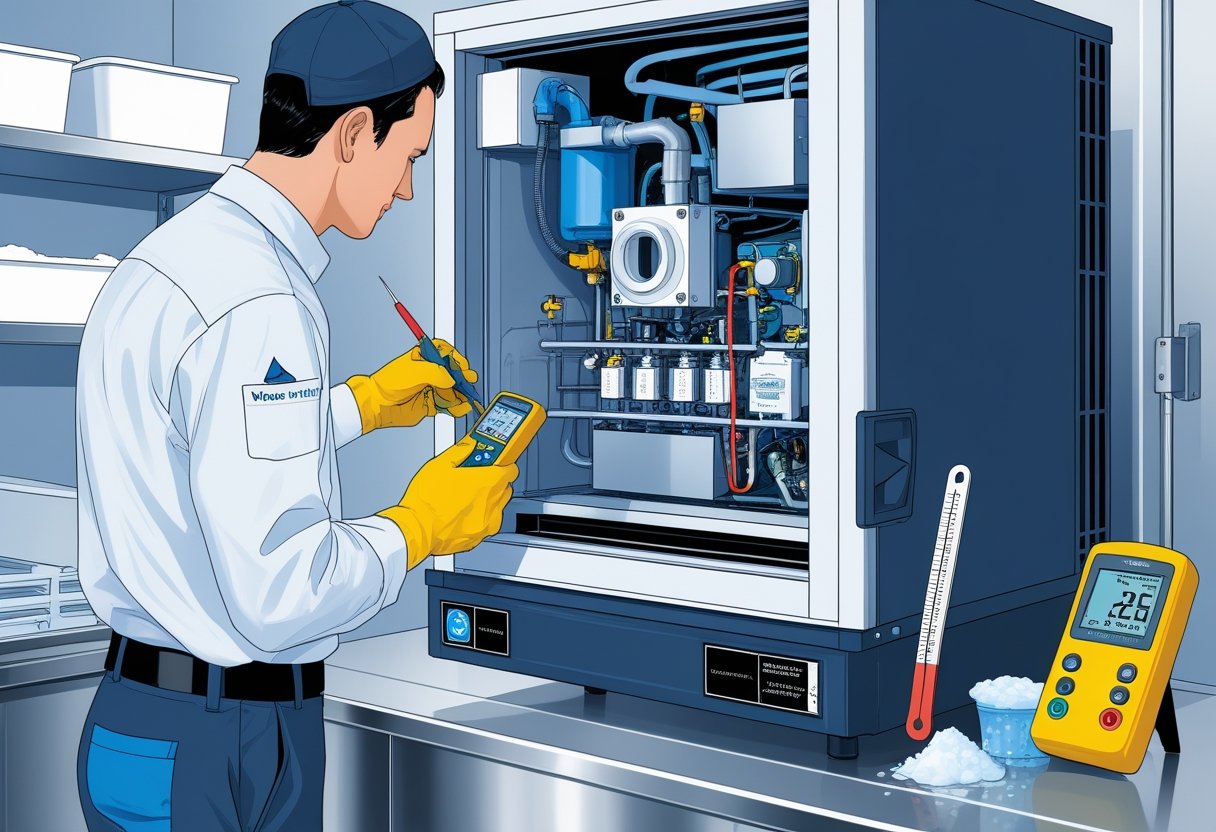
Signs of a faulty valve include no water entering the unit even though the supply line is fine or a valve that stays stuck open, causing leaks. You can test the valve’s electrical coil with a multimeter to check continuity.
Replacing the water inlet valve typically requires professional assistance, as it involves disconnecting water lines and electrical components. Contact Memphis Ice’s refrigeration experts for safe and reliable repair to avoid downtime during busy periods.
Frozen Water Line
A frozen water line is a common but often overlooked cause of no ice production. Extreme cold or intermittent flow can cause water to freeze inside the tubing, blocking water from reaching the ice maker.
Look for frost or ice buildup on the water line tubing or near the inlet valve. If you suspect freezing, power down the machine and allow the line to thaw completely before restarting.
Prevent frozen water lines by confirming proper machine defrost cycles, maintaining correct room temperature, and ensuring water pressure is consistent. Regular maintenance checks help catch this early, keeping your ice machine operational when you need it most.
For ongoing support safeguarding your equipment, Memphis Ice offers comprehensive maintenance plans tailored to Mid-South businesses.
Resolving Slow or Incomplete Ice Making
Slow or incomplete ice production often points to specific issues related to water supply and the ice machine’s environment. Addressing these factors promptly ensures consistent ice output and quality, keeping your operation running smoothly.
Low or Fluctuating Water Pressure
If your ice machine produces ice slowly or in smaller amounts than usual, low or inconsistent water pressure is a common culprit. Commercial ice machines require stable water pressure, usually between 20 and 80 psi, to fill the mold properly during each cycle.
Low pressure can result from plumbing problems, water leaks, or undersized supply lines. Fluctuating pressure causes interruptions in the fill cycle, reducing ice volume. Check your building’s water pressure with a gauge to confirm stability.
Ensuring that water pressure stays within the ideal range helps maintain production speed. If pressure issues persist, you may need to upgrade your plumbing or add a pressure regulator. For expert advice tailored to your Memphis-area business, Memphis Ice can assist with these adjustments.
Dirty or Clogged Water Filter
A clogged water filter restricts the flow of clean water into your ice machine, which slows ice formation and can cause incomplete cubes or mold shapes. Sediment, chlorine, and other contaminants trapped in the filter reduce water volume and impair the freezing process.
Replacing or cleaning the water filter regularly is critical. Most manufacturers recommend filter changes every six months, but this can vary depending on water quality. Signs your filter needs attention include ice with discoloration, an odd taste, or visible slow water flow.
A well-maintained filter protects your machine’s internal components and keeps ice production running at full capacity. If you’re unsure when to change your filter or need servicing, call Memphis Ice for reliable maintenance support.
Ambient Temperature Effects
High ambient temperatures impact how quickly your ice machine can freeze water. When the surrounding air is too warm—above 75°F or in spaces with poor ventilation—ice production slows significantly because the condenser struggles to dissipate heat.
Your machine may also overwork, leading to higher energy use and wear on components. Ensure the ice machine is positioned away from heat sources and has adequate airflow for cooling. Check that ventilation grilles are free from dust and obstructions.
Adjusting the room temperature or improving ventilation can speed ice production. During Memphis summers, keeping your ice machine in a cooler environment reduces the risk of slow ice output and helps maintain reliable service. More tips on optimizing ice production can be found at these ice machine troubleshooting resources.
Fixing Ice Quality and Ice Size Problems
Ice that doesn’t meet your expectations can slow down service and affect customer satisfaction. Addressing issues like undersized cubes, hollow ice, and improper thickness helps ensure reliable ice production. Maintaining proper water quality and adjusting settings often resolves many common ice appearance and texture problems.
Small or Hollow Ice Cubes
Small or hollow ice cubes usually indicate a water flow or temperature issue. Insufficient water supply during the freezing cycle can cause the ice to form too quickly, trapping air inside and resulting in hollow or weak cubes.
Check your water inlet valve and supply line for blockages or leaks. If there’s reduced water pressure, your machine won’t fill properly. Also, allow the ice maker to complete its full freezing cycle; disrupting this can produce incomplete ice cubes.
Improper water temperature can also cause this problem. The water should ideally be between 50-70°F for proper freezing. Too warm or too cold water affects cube formation. For persistent issues, consider contacting Memphis Ice for expert service and parts replacement to restore quality.
Poor Water Quality Impact
Water quality plays a key role in ice clarity and taste. Hard water or high mineral content often leads to cloudy, oddly shaped ice and can cause scale buildup inside your machine.
Using a water filter designed for your ice maker helps reduce minerals, chlorine, and other contaminants. Regular replacement of these filters ensures consistent ice quality. Monitor your machine’s internal cleanings to prevent clogging and corrosion caused by impurities.
If you notice persistent taste or clarity problems, it’s worth testing your water supply and upgrading filtration. Preventive maintenance, like regular descaling, also helps keep your ice looking good and your equipment running smoothly.
Ice Thickness Adjustments
The thickness of your ice cubes affects not only appearance but also freezing efficiency and machine performance. Most commercial ice machines allow you to adjust the thickness by modifying the ice thickness control or timer settings.
If your ice is too thin or fragile, increase the ice thickness setting gradually. Too thick can lead to longer cycle times and risk of jams. Refer to your machine’s manual for specific adjustment steps.
For machines lacking a manual control, temperature or freezing cycle timing alterations may be necessary. If you are unsure, Memphis Ice technicians can assist with precise calibration to match your business needs, preventing downtime and optimizing ice output.
Addressing Water Leaks and Overflows
Water leaks or overflows in your commercial ice machine can cause damage and disrupt operations. Identifying the exact cause is key to fixing the issue quickly and preventing further problems.
Leaking Water From the Unit
Water leaking from the ice machine often signals worn or damaged seals, loose connections, or cracks in internal parts. Check around the base and under the machine for pooling water.
Leaking can come from the ice bin or supply lines and usually results from components that no longer fit tightly. Replace old gaskets and tighten fittings to stop leaks.
Regular inspection helps catch small leaks before they escalate. If the leak persists, professional service like the Memphis Ice refrigeration experts can provide accurate diagnosis and repair.
Clogged or Damaged Drain Lines
Drain lines carry away excess water; if blocked or broken, water backs up inside the machine, causing leaks or overflow. Debris, mold, or mineral buildup often clog drains.
To fix, disconnect and clean drain lines with a brush or mild cleaner. Inspect lines for cracks or breaks and replace if damaged. Keep drain paths clear with scheduled maintenance, especially during Mid-South’s humid months, to avoid sudden water issues.
Watch for slow drainage or standing water as early warning signs that your drain lines need attention.
Water Valve Failures
The water valve controls how much water enters your ice machine. A malfunctioning valve may send too much water or fail to close properly, causing flooding or continuous leaks.
Turn off the water supply and check the valve for cracks, wear, or failure to shut off fully. Replacing the valve is often the simplest fix.
Routine maintenance includes valve inspection to ensure it operates smoothly and prevents water damage, a service Memphis Ice has provided for local businesses for over 49 years.
Maintaining valve health avoids costly downtime and protects your kitchen from leaks.
Routine Preventative Maintenance
Maintaining your commercial ice machine regularly helps prevent breakdowns and ensures the quality and safety of the ice. Key tasks include thorough cleaning, replacing essential parts, and scheduling professional inspections. Each step plays a vital role in maximizing your machine’s efficiency and lifespan.
Cleaning and Descaling the Machine
Regular cleaning removes mineral buildup, bacteria, and mold that affect ice quality and machine performance. Pay special attention to the water system—sanitize all surfaces that contact water and ice every 1 to 3 months, depending on usage and water hardness. Descaling prevents scale buildup on evaporator plates, which reduces cooling efficiency and increases energy use.
Use manufacturer-recommended cleaning solutions, and never mix products. After cleaning, flush the system thoroughly to remove residues. Many commercial ice machines have cleaning cycles or protocols clearly outlined in their manuals. Following these procedures keeps your machine hygienic and functioning smoothly, minimizing unexpected shutdowns.
Replacing Filters and Components
Filters are your machine’s first defense against impurities, so change water filters regularly—usually every 6 months. Dirty or clogged filters reduce water flow and ice production, and can lead to premature failure of internal parts. Also, inspect and replace wear items like gaskets, belts, and air filters based on usage and environmental conditions.
Keep a record of when components were last changed. This proactive approach avoids costly emergency repairs and helps you adhere to local health regulations. Memphis Ice recommends setting calendar reminders aligned with your machine’s manual to stay ahead in your preventative maintenance schedule.
Scheduled Professional Service
Even with thorough daily and weekly care, your ice machine benefits from professional inspections at least twice a year. Technicians check refrigerant levels, electrical connections, and mechanical components like bearings and augers, which are not always easy to assess on your own.
Professional service can identify minor issues before they become major problems. Make sure your service provider documents any needed repairs over $250 separately, following proper reporting protocols. Whether you’re in Memphis or the surrounding Mid-South, scheduling regular maintenance with experts like Memphis Ice ensures your commercial ice machine meets operational demands year-round.
Frequently Asked Questions
Understanding why your ice machine stops working or produces less ice can save you time and avoid costly repairs. Identifying common issues and following straightforward steps helps maintain consistent ice production and extends your machine’s lifespan.
Why is my ice machine not producing any ice?
Check the power supply first to ensure the machine is plugged in and switched on. A disrupted water supply or a frozen water line often causes no ice production.
The water filter may be clogged, restricting flow. Also, verify that the temperature around your machine is within the recommended range for optimal ice formation.
What are the common causes of ice machine malfunctions?
Low water pressure, dirty condenser coils, and scale buildup inside the machine are frequent issues. Mechanical problems like faulty pumps, sensors, or control boards also affect performance.
Regular cleaning and timely parts replacement prevent many of these malfunctions and keep production steady.
How can I diagnose and fix a clogged water line in my ice maker?
Signs include slow ice production or no ice output. Locate the water line and inspect it for blockages or kinks.
Flush the line with warm water or use a gentle cleaning solution designed for ice makers. Replace the tubing if it remains clogged.
What should I include in a regular maintenance checklist for an ice machine?
Check and clean condenser coils monthly to ensure efficient cooling. Replace water filters every six months or as recommended.
Inspect water and drain lines for clogs and leaks regularly. Remove mineral buildup with approved descaling agents during routine cleaning.
How can I resolve issues with my Whirlpool ice maker not producing ice?
Ensure the freezer temperature is set low enough, typically between 0°F and 5°F. Check the water inlet valve for proper operation.
Reset the ice maker by turning it off and on, or consult the owner’s manual for model-specific troubleshooting steps.
What steps should I take for troubleshooting commercial ice machines?
Start by verifying the water supply and electrical connections. Clean and inspect external and internal components like the condenser and evaporator coils.
Monitor the machine’s ice production cycle to spot irregularities. When in doubt, contacting local Memphis Ice refrigeration experts can save time and protect your equipment. Request service before the busy season hits.
Recent News

Behind the Scenes: How Ice Supports Catering, Festivals, and Spring Events

The Role of Ice in Spring Menus: From Patio Drinks to Seasonal Specials

Is Your Ice Machine Ready for Warmer Weather?
Spring Cleaning For Your Ice Machine

Hosting Easter Brunch? Don’t Forget the Ice
How Often to Clean a Commercial Ice Machine for Best Performance and Longevity